
Grant County Warrant Search Channels
No official Grant County online active-warrant search page was found in the research materials. That matters because an online name search cannot be treated as a complete safety check. The official fallback chain starts with the Grant County Sheriff's Office for active arrest-risk questions, the Clerk of the Circuit Court for court case records, and the specific city court when the warrant grew out of a city-court ticket, misdemeanor, or ordinance case.
Grant County warrant records may also appear indirectly in Indiana MyCase when a public court case shows a missed hearing, failure to appear, petition to revoke, bond forfeiture, or warrant-related hearing. MyCase is useful for case context, but it is not a live warrant-clearance tool. Public court data can lag, and sealed warrants may not appear. The Sheriff's Office non-emergency line is the direct local contact for active status questions.
The Grant County Sheriff's Civil Process page is an official source for several court-order terms tied to warrant risk. It explains that a Rule to Show Cause directs a defendant to appear in person at a set date and time, and failure to appear can lead to a warrant. It also describes orders to appear, protective orders, restraining orders, subpoenas, summonses, notices, garnishment, guardianship paperwork, immediate possession, petitions to revoke, sheriff sale, and other served papers.
The civil-process source is shown in the image below from the official sheriff page. The Grant County Sheriff's civil-process page helps connect warrant records to missed court orders, not just new criminal arrests.
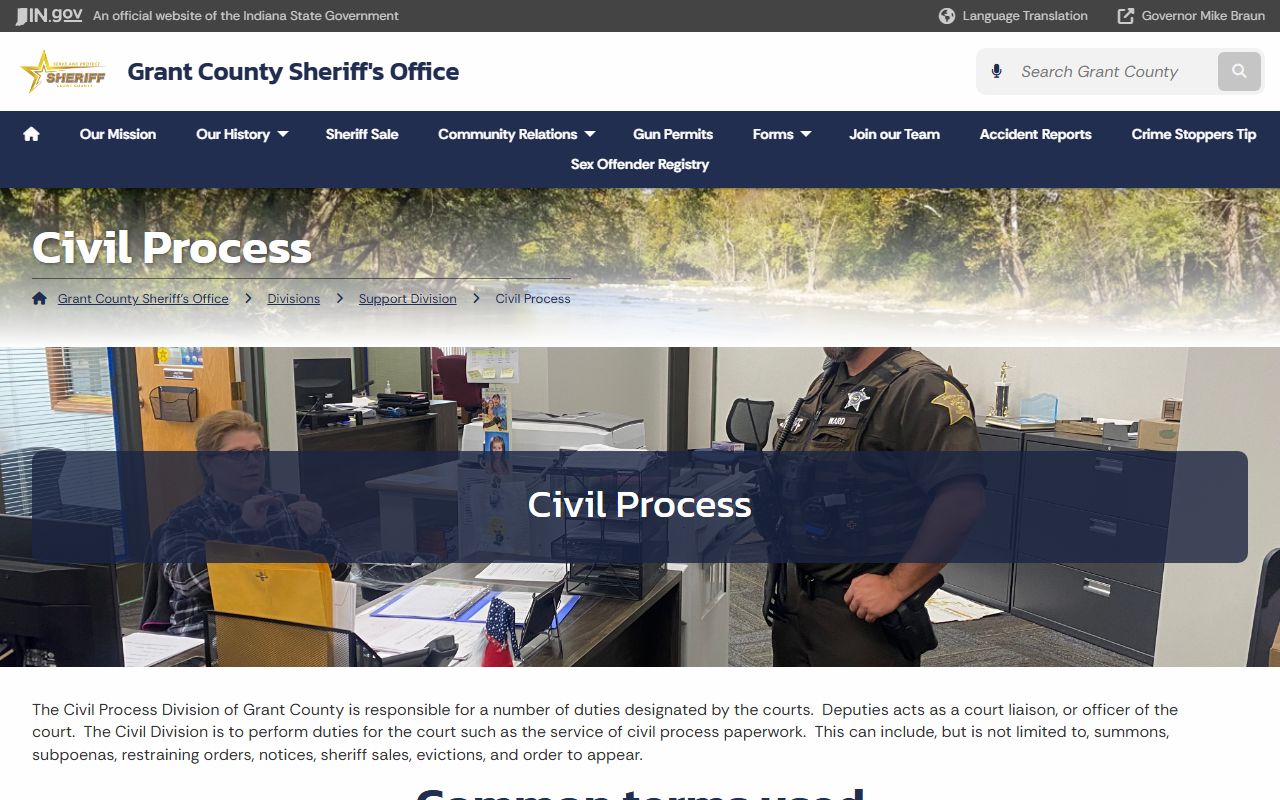
That source supports a cautious search method: identify the underlying court order first, then confirm whether a warrant was issued or recalled.
Grant County Warrant Court Routing
Grant County warrant records are affected by local court routing. Gas City City Court and Marion City Court handle many misdemeanors, infractions, ordinance violations, and city traffic matters. A failure-to-appear warrant in one of those cases may be tied to court code 27H01 or 27H02 rather than the Circuit and Superior Courts. Grant Superior Court 3 handles Level 6 felonies and misdemeanor cases with an OWI charge under IC 9-30-5. Circuit Court handles Drug Court and Veterans Treatment Court cases, while Superior Court 1 handles Reentry Court cases.
| Court or Office | Warrant Record Relevance | Contact From Research |
|---|---|---|
| Grant County Sheriff's Office | Active warrant status, arrest risk, service, booking after execution | 214 E 4th St, Marion; (765) 668-8168 |
| Clerk of the Circuit Court | Court case entries, bench-warrant context, copies, official case records | 101 E 4th St, 1st Floor; (765) 668-8121 |
| Marion City Court | City-court misdemeanor, infraction, ordinance, and traffic bench warrants | 301 S Branson St; (765) 668-4425 |
| Gas City City Court | Gas City ordinance, traffic, infraction, and misdemeanor bench warrants | 211 E Main St; (765) 667-3081 |
A person checking a Grant County warrant should first identify the case court, not only the person's name. The same person can have a city-court traffic matter, a Superior Court criminal matter, and a separate civil enforcement order. Each record may have its own docket, bond status, hearing date, and recall entry. If a case number starts with 27H01 or 27H02, the city court is part of the warrant search path.
The U.S. Attorney source in the manifest is federal, not the county warrant list. The U.S. Attorney's Office for the Northern District of Indiana is relevant only when a matter is federal rather than a Grant County state or city-court warrant.
Federal prosecution and fugitive matters follow a different system, so county court and sheriff records should not be mixed with federal warrant records.
Grant County Warrant Search Fields
Because Grant County did not publish a public active-warrant portal during the research review, there is no county warrant form with official search fields to reproduce. The practical search inventory comes from the available official channels: MyCase for public court entries, the Sheriff's Office for active status, and the city or county court for bench-warrant context. Each channel uses a different set of identifiers.
| Field or Detail | Where It Helps | Required | Notes |
|---|---|---|---|
| Name | MyCase, sheriff phone check, clerk or city court call | Usually needed | Use full legal name when possible to reduce mismatches. |
| Case number | MyCase, Clerk, Marion City Court, Gas City City Court | Best if known | Grant court codes include 27C01, 27D01, 27D02, 27D03, 27H01, and 27H02. |
| Court name | Bench-warrant and failure-to-appear checks | Helpful | City-court cases may not route through the same office as Superior Court cases. |
| Date of birth | Identity confirmation | May be requested | Useful when names are common, but public display may be limited. |
| Underlying charge or order | Warrant type and bond questions | Helpful | Examples include missed court date, petition to revoke, or Rule to Show Cause. |
| Attorney information | Resolution planning | Optional | Represented people should let counsel contact the court or prosecutor. |
For a public case search, select Grant County or the specific Grant court in MyCase when filters are available. Name-only searches can return unrelated cases, especially where a person has older traffic, small-claims, or criminal entries. A warrant check should compare the docket history, next hearing, bond entry, and any recall or quash order before drawing a conclusion.
Indiana's public-record framework also affects warrant visibility. Indiana Code Title 5 includes the Access to Public Records Act framework, but sealed warrants, juvenile matters, protected-party records, and search warrants may be unavailable to the general public.
The state-law source explains why a warrant record may exist while some details remain withheld from public search results.
Grant County Warrant Record Inventory
A Grant County warrant record can be a court record, a sheriff service record, a jail booking result, or a restricted law-enforcement record depending on the stage. Public court entries may show the reason a warrant was issued, while sheriff or jail records may show service and custody after execution. The research inventory supports the following fields, but it does not show a public county warrant database with a uniform result screen.
| Field | What It Shows |
|---|---|
| Person name | The person tied to the warrant or court order. |
| Case number and court | The Grant County court, city court, or case file connected to the warrant. |
| Warrant type | Arrest, bench or failure to appear, petition to revoke, body attachment, search warrant, or sealed warrant. |
| Issuing court or judge | The court authority that signed or entered the warrant. |
| Underlying charge or order | The charge, missed hearing, probation matter, or civil order behind the warrant. |
| Bond status | Bond amount, no-bond status, or later bond-review information if public. |
| Issue and recall dates | When the warrant issued and whether it was later recalled, quashed, or cleared. |
| Service or booking detail | Information after the warrant is served, when public and available. |
| Next hearing | The court date after arrest, surrender, or warrant recall. |
| Restriction status | Whether the record is sealed, juvenile, protected, or otherwise withheld. |
Search warrants deserve special caution. They are often not public before execution and may remain limited afterward if tied to an ongoing investigation, protected person, juvenile, or sealed case. Juvenile warrants and protection-order-related records also can be restricted. A public MyCase search that shows no warrant entry does not prove that no warrant exists.
Resolve a Grant County Warrant
Warrant resolution should be handled through the office that can see the current status. A missed city-court date should be checked with Marion City Court or Gas City City Court before appearing. A Circuit or Superior Court case should be checked through the Clerk or the court listed in the public docket. If arrest risk is the main issue, the Sheriff's Office should explain how to verify status and what to do safely.
- Search MyCase by name and Grant County to find public missed-hearing, failure-to-appear, bond-forfeiture, petition-to-revoke, or warrant-related entries.
- Call Marion City Court at (765) 668-4425 or Gas City City Court at (765) 667-3081 if the matter is a city-court traffic, ordinance, misdemeanor, or infraction case.
- Call the Clerk of the Circuit Court at (765) 668-8121 when the case is in Grant Circuit Court or one of the Grant Superior Courts.
- Call the Sheriff's non-emergency line at (765) 668-8168 for active warrant status questions and surrender instructions.
- If represented, have the attorney contact the prosecutor or court about a hearing, bond review, recall, or quash order.
- Before appearing in person, confirm the location, hours, bond eligibility, and personal-property rules.
- After the court resolves the matter, confirm that the warrant recall has been entered before assuming the warrant is cleared.
Important: A warrant can lead to arrest; legal counsel should be contacted before surrender or court appearance when possible.
The Sheriff's jail visitation source is not a warrant search tool, but it matters after a warrant is served and a person is booked. Grant County jail visitation information explains the rules that apply once a person is in custody.
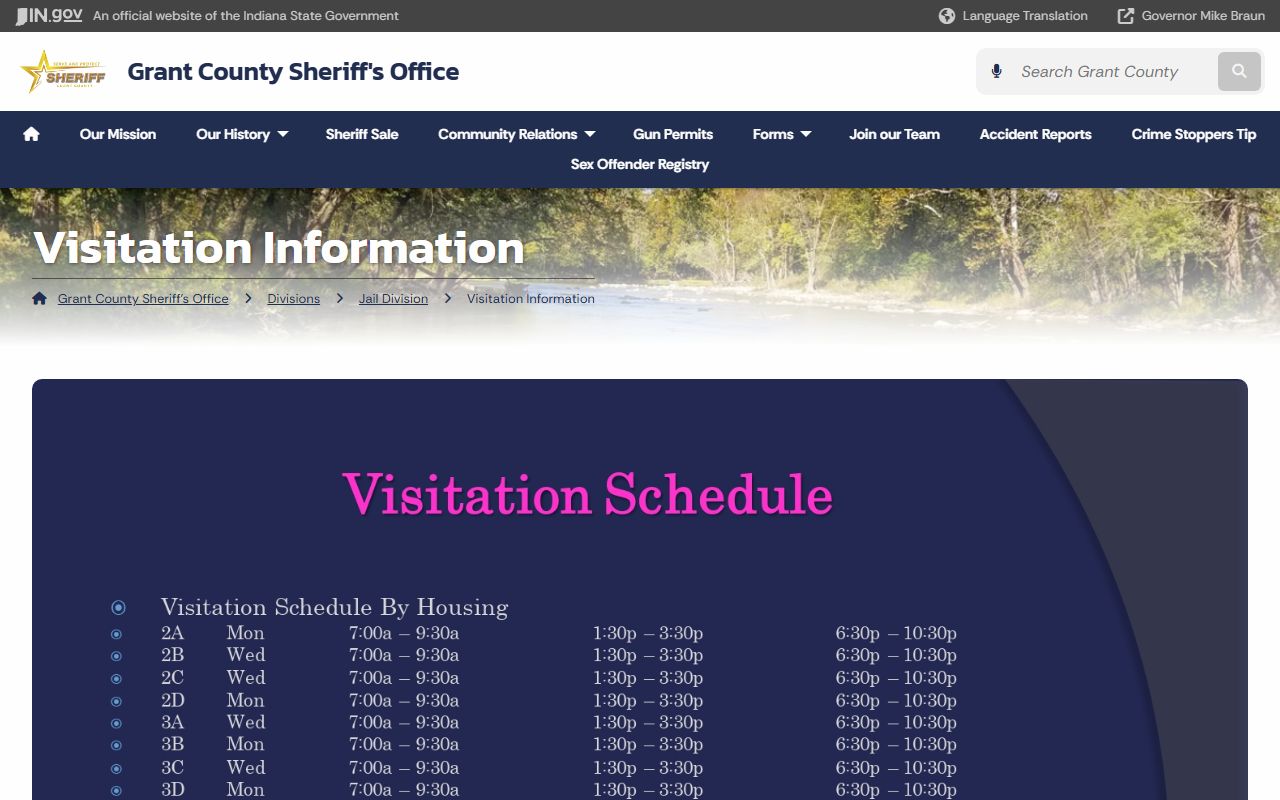
That custody source belongs in the warrant path only after execution, when family members may need jail and visitation details.
Grant County Warrant Limits
Grant County warrant records do not all have the same public access status. Bench warrants connected to public traffic or criminal cases may leave public docket traces. Sealed warrants, juvenile warrants, search warrants, protected-party matters, and some investigation records may be withheld. Federal warrants are outside the county system and may involve federal court, the U.S. Marshals Service, or the U.S. Attorney's Office.
If a warrant results in a jail booking, custody may appear through the Grant County jail roster or other jail channels. Mail and custody rules are separate from warrant issuance. The Grant County inmate mail policy is a custody source, not a warrant record source, but it can become relevant after arrest on a warrant.
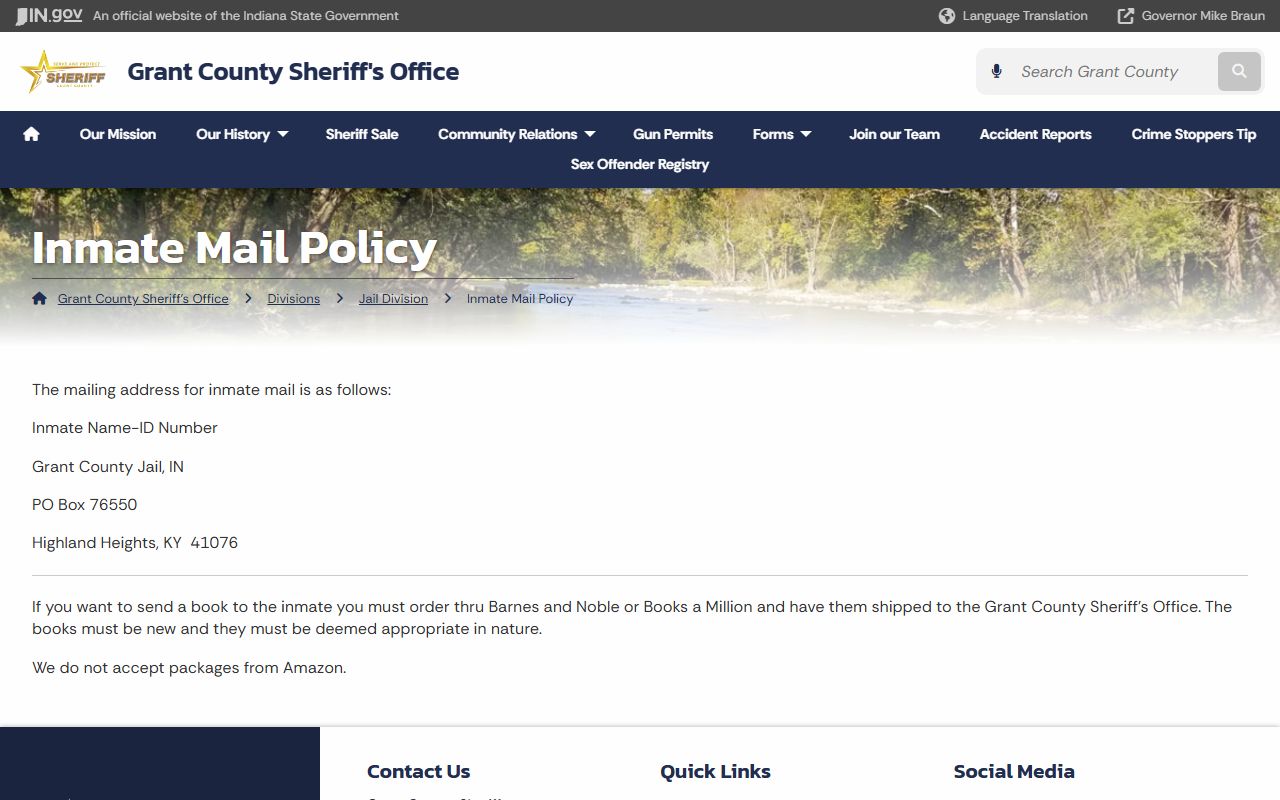
Keeping warrant, court, and jail sources separate prevents a stale custody detail from being mistaken for an active warrant result.
Note: Public case entries can help identify a warrant path, but the issuing court or sheriff must confirm current status.